Friday, December 29, 2006

Little Moon

One of the joys of my life is my 19 month old daughter. Let's call her Little Moon. Why? Well, she has a list of favorite words: cat (the first English word she spoke - my parents have a cat), plane (we live on the route to JFK airport so whenever a plane flies by overhead, she rushes to the back door to see it fly into the distance, and proceeds to say bye-bye), and of course, moon.

One of her favorite books is naturally, Goodnight Moon. That is where she learned the word while reading the book with her mother who diligently taught her this and many other words she now knows.


She is very sharp in identifying images of the moon. It could be the actual moon in the sky - full or crescent. A picture in a book. Or funny enough, any image that resembles it. One day we were walking down the steps to our basement. The stairs are wood and have random carvings on it that came about naturally and over the years. As she is walking down the steps holding my hand, she sees a little curve line creating a lighter shade in the dark wood. The line can't be more than half an inch. But sure enough she points to it and says, "Moon!"

That was very sweet.

We have a routine where after I come home, we will go to our bedroom and I will turn on the cd player and we'll dance to songs. I started this after I bought the Best of R.E.M. cd, so when we dance it's to R.E.M. The first track on the cd is of course, Man on the Moon. So as we are dancing and looking at ourselves in the mirror in our bedroom, as soon as she hears the refrain, "Do you believe, they put a man on the moon, man on the moon," she will join in and say "Moon!"

Another game we have is playing ball. Our basement is such that the stairs come down in the middle of the basement so that you can walk around the stairs in a circle. We have one of those big bouncy balls, the kind that you see in supermarkets in those receptacles stacked up high, about the size of a soccer ball but light as air. So we would kick the ball to her and she learned to kick it. I'm pretty sure we started this during the World Cup or around then. She kicks funny. It's not a kick where you bend your knees and let your calf portion generate the momentum. She does a straight leg kick, scissor style and it's so cute because you know she's trying.

So in the basement, I try to get her to play soccer with me and kick the ball. Except whenever we start doing that, she, for some reason, wants to just run and run around the stairs in the circle fashion. That's her enjoyment and excitement. So what I try to do is to kick the ball to her as she's running, and at times she will kick it if it comes in her path. But the game for her has become to avoid being caught by the ball as I kick it to her. So she runs and runs, and I try to catch her by kicking the ball in her direction so the ball reaches her and so she can kick the ball.

My enduring image is of her zooming across the basement tile floor around the bend of the stairs while I am just at the previous bend, as I try to kick the ball in vain to reach her as she, her back to me, disappears from my view.

She has become so fast that I can't kick the ball at each end and catch up to her, so I cheat and wait til she comes around and laps me basically and kick the ball to her then.

These are the joys of Little Moon.
-------------------
Comments:

Ganesh said...
dude, this was a wonderful post! i especially love the paragraph describing dancing to REM when you get home from work.you should make a post about how LittleMoon calls every animal a cat.
December 29, 2006 12:53 PM

lostandfound said...
you're right. but she's graduated to calling a dog, a dog. except now she calls other four legged animals she can't recognize, like rabbits and squirrels, dogs!
December 29, 2006 1:22 PM
lbc said...
great post. hurray for little moon!
December 30, 2006 3:59 AM
tamasha said...
You should set up a video camera (or whatever they're called these days) to record one of your dance sessions. It will make her roll her eyes when she's 15, but it will be really special to her later.She's got quite the sparkle in her eyes.
January 1, 2007 9:59 PM
lostandfound said...
hi tamasha, that's a great idea. it's so easy to let moments slip by without saving them for later.thanks for the compliment. do you have kids?
January 2, 2007 12:48 PM
Sujata said...
I think she looks like me, don't you think? When I was like 2 with the crazy curly hair? And I cried all the time? And you would be like uhhh, why are you crying? Haha, yup, she is SO like her pishi!
January 2, 2007 4:19 PM
lostandfound said...
sujata, yes, you're right
January 2, 2007 5:17 PM

Tuesday, December 26, 2006

James Brown is Forever Alive - lnf


James Brown is dead. No, not the 1992 L.A. Style track which tried to negate the need for soul in dance tracks. The real living legend, "The Hardest Working Man in Show Business" is really gone, having passed on Christmas Day.

JB was a special figure in my own exploration into music, soul, race, and expression. I don't know when was the first time I saw a video of JB, but I knew it was electric. I think it was on Video Music Box, the afterschool rap music show on Channel 21 that showed all the cool videos.

Seeing JB do his moves just made me want to be like him. And so when I was alone in my own room, dorm room, or apartment, I would get the hair brush out like it was my mike, put on the JB tape, and let it rip. For me, he represented a certain fearlessness about himself. Not afraid to let his soul come out, let it all hang out. And I admired that, primarily because my own personality was not like that. But certain situations or songs would bring that out in me, and I liked that new me, as fleeting as it was.

So JB was a reminder of what can be, of what I can be.

He was also a pioneer of sound and beat and dance, influencing the whole of hip-hop and rap. He contributed many great tracks which have a life of their own: I Got You (I Feel Good), Papa's Got a Brand New Bag, Say it Loud - I'm Black and I'm Proud, Sex Machine, just to name a few.

Watching him and listening to him was a liberating experience. It is like how they say, when one person is liberated, it cannot help but have a liberating effect on those around him.

Sex Machine affirmed my machismo. I'm Black and I'm Proud was the basis o
f one of the placards we used during an anti-racist march after the beating of a young Indo-Caribbean in Richmond Hill. Our placard read "I'm Brown and I'm Proud." Newsday ran a picture of two little girls, twins actually - maybe 6 or 7, each holding signs saying "I'm Brown and I'm Proud."

So I was not such a follower of JB where I went to any of his concerts or had a big collection of his albums - I had some. But his influence on me and the world extended far beyond his music.

And so, even as his own personal history was uneven and, at times, troubled, JB was a legend, a true American original representing agony and exultation, pride and pain. Most importantly, he did it with soul, his soul, which he was never afraid to express, and which in turn liberated so many others to express their own soul, even if it was for a brief moment with the hair brush while alone in one's world.

Monday, December 18, 2006

'Tis Not Too Late to Seek a Newer World - lnf

Since this is the first blog that I've ever started, I am uncertain of really what to write. I look at my friend's blog, brooklynmasala.blogspot.com, and I think, man, that is how a blog should be or at least that's the way I would like to create a blog - part storytelling, part reflection/journal, part history, part art and poetry, and part political news and exhortation.

But I'm not there yet, nor do I have ideas of how to get there. So I'm focusing on just getting my thoughts down on the screen, and see what flows.

I'll start with some major influences, though they will date me.

But before I do, I revisited my friend's blog and saw that his first entries were very much like journal entries - a series of thoughts, reflections, and experiences. No graphics and very simple. So that makes it a little bit more manageable for me.

Among my influences growing up were reading about figures such as Robert F. Kennedy, Malcolm X, and Gandhi - very common figures I would say for anyone influenced by progressive politics and social justice issues.


With Kennedy, I was fascinated by his transformation or evolution toward the end of his life and political career, how his politics seemed to have depth. That there was a underlying philosophical and poetic influence to his politics, thus giving him a passion that a regular politico just doesn't have.

I remember reading Arthur Schlesinger's book and Jack Newfield's book on Kennedy and was inspired by references to poetry, Greek and otherwise.

One such poem that I really liked was this poem by Tennyson. The title is Ulysses, and it refers to the great epic, the Odyssey. But I knew it from the line "'Tis not too late to seek a newer world."


IT little profits that an idle king,
By this still hearth, among these barren crags,
Match’d with an aged wife, I mete and dole
Unequal laws unto a savage race,
That hoard and sleep, and feed, and know not me.
I cannot rest from travel: I will drink
Life to the lees: all times I have enjoy’d
Greatly, have suffer’d greatly, both with those
That loved me, and alone; on shore, and when
Thro’ scudding drifts the rainy Hyades
Vext the dim sea: I am become a name;
For always roaming with a hungry heart
Much have I seen and known; cities of men
And manners, climates, councils, governments,
Myself not least, but honour’d of them all;
And drunk delight of battle with my peers,
Far on the ringing plains of windy Troy.
I am a part of all that I have met;
Yet all experience is an arch wherethro’
Gleams that untravell’d world, whose margin fades
For ever and for ever when I move.
How dull it is to pause, to make an end,
To rust unburnish’d, not to shine in use!
As tho’ to breathe were life. Life piled on life
Were all too little, and of one to me
Little remains: but every hour is saved
From that eternal silence, something more,
A bringer of new things; and vile it were
For some three suns to store and hoard myself,
And this gray spirit yearning in desire
To follow knowledge, like a sinking star,
Beyond the utmost bound of human thought.
This is my son, mine own Telemachus,
To whom I leave the sceptre and the isle—
Well-loved of me, discerning to fulfil
This labour, by slow prudence to make mild
A rugged people, and thro’ soft degrees
Subdue them to the useful and the good.
Most blameless is he, centred in the sphere
Of common duties, decent not to fail
In offices of tenderness, and pay
Meet adoration to my household gods,
When I am gone. He works his work, I mine.
There lies the port: the vessel puffs her sail:
There gloom the dark broad seas. My mariners,
Souls that have toil’d, and wrought, and thought with me—
That ever with a frolic welcome took
The thunder and the sunshine, and opposed
Free hearts, free foreheads—you and I are old;
Old age hath yet his honour and his toil;
Death closes all: but something ere the end,
Some work of noble note, may yet be done,
Not unbecoming men that strove with Gods.
The lights begin to twinkle from the rocks:
The long day wanes: the slow moon climbs: the deep
Moans round with many voices. Come, my friends,
’Tis not too late to seek a newer world.
Push off, and sitting well in order smite
The sounding furrows; for my purpose holds
To sail beyond the sunset, and the baths
Of all the western stars until I die.
It may be that the gulfs will wash us down:
It may be we shall touch the Happy Isles,
And see the great Achilles, whom we knew.
Tho’ much is taken, much abides; and tho’
We are not now that strength which in old days
Moved earth and heaven; that which we are, we are;
One equal temper of heroic hearts,
Made weak by time and fate, but strong in will
To strive, to seek, to find, and not to yield.


What drew me to this poem, aside from Kennedy's own liking of it, was the sense that life is arduous, full of struggle, but nevertheless there is and can always be new beginnings. There is also this sense of a kindred spirit between Ulyssess and his fellow journeymen. It reminds me of the bond I have with my close friends who I have known for such a long time, and while we go through different stages, relationships, phases, jobs, locations, and struggles, we, together, push forward to inspire each other to reach the new frontier.

--------------------------

"How dull it is to pause, to make an end, To rust unburnish'd, not to shine in use!

but every hour is saved From that eternal silence, something more, A bringer of new things

Death closes all: but something ere the end, Some work of noble note, may yet be done,

The lights begin to twinkle from the rocks: The long day wanes: the slow moon climbs: the deep Moans round with many voices. Come, my friends, 'T is not too late to seek a newer world. Push off, and sitting well in order smite The sounding furrows; for my purpose holds To sail beyond the sunset, and the baths Of all the western stars, until I die.

We are not now that strength which in old days Moved earth and heaven, that which we are, we are; One equal temper of heroic hearts, Made weak by time and fate, but strong in will To strive, to seek, to find, and not to yield.


---------------

Comments:

Ganesh said...
hey bro, i love the poem, and i love tennyson. i especially like the lines:I am a part of all that I have met;Yet all experience is an arch wherethro’Gleams that untravell’d world, whose margin fadesFor ever and for ever when I move.i love that you're blogging, bro! i never knew that you were influenced by RFK. have you read Parting the Waters yet? both PJAddict and i really like it. definitely read it.
December 21, 2006 11:13 AM

lostandfound said...
yeah, i've been influenced by rfk's life since high school when i did a report on him. i was affected how his brother's death made him melancholy and how that transformed his politics and worldview.
December 21, 2006 4:55 PM

lbc said...
One of my first memories of lostandfound was driving around Delaware County trying (not very successfully) to investigate bad conditions in public housing. He exclaimed, "This is just like Bobby Kennedy and his men doing an investigation!" That's when I knew I had a long-term friend in the car.Good post.
December 21, 2006 10:08 PM

Ganesh said...
This post has been removed by the author.
December 22, 2006 9:05 AM

Ganesh said...
when was that? when we were in college?(sorry, typo before)
December 22, 2006 9:06 AM

lostandfound said...
yeah, i remember that well. that was when i realized lbc was a cool dude and we would be friends.maybe like my freshman or sophomore year.
December 26, 2006 2:27 PM

Thursday, November 30, 2006

Thursday, November 16, 2006

Blockages


From a note to a friend:

i go through periods when i shut people out for no good reason. i gravitate toward easy marks in close quarters, so as to avoid the hard work of excavation and explanation that occurs when i speak with an old and knowing friend. this is particularly the case when my good work is shadowed by writer's block. i have to lie to people and make them think that everything is alright, when i am fucking up a good job and remain frustrated with my inability to express my thoughts and ideas to the wider world. it's a funny thing, this writer's block which seems to cause speaking blockages as well.

Monday, November 13, 2006

Lost in the Plot

Though the Montreal band the Dears have a new and well-regarded album called Gang of Losers, I love the band for a single song from their last album. Whatever it truly is about, "Lost in the Plot," twinned with the following video, continues last week's theme of secondary school alienation, in this case of a young Black child in a northern white world.

Reasons why I love the video and song:

  • The combination of still and video photography;
  • The kid;
  • His valiant effort to dance to Motown-inflected indie rock;
  • The "Our love/don't mess with our love/our love is so much stronger" refrain;
  • Lead singer Murray Lightbourne's bright yellow maracas, which he throws to the ground at the moment when the song accelerates to its end;
  • The quick sequence of still photographs at the end of the video as Lightbourne wails "I promise not to cry any more";
  • The child's sad eyes;
  • Ending with a photograph of him on a snow-laden landscape.
I can't speak with any knowledge about the videography, such as the bright glare used to obscure the band through most of the video, though those techniques seem to make it visually textured and interesting. Regardless, it is the picture of the lonely child on a snowscape that hits me hardest.

Friday, November 10, 2006

Speaking as a Child of the Seventies

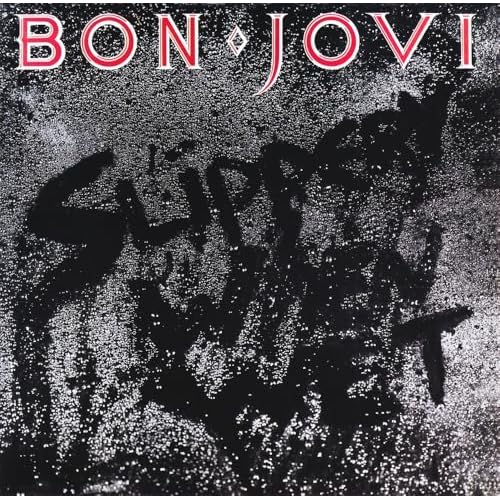
Before going through successive periods listening to WFAN in early October (baseball) and Air America in late October (politics), I would tune in a few different rock stations on my way to and from work. One morning as I came to stop for coffee, the old Bon Jovi song "Runaway" came on Jack FM or Q104 or some such station. It struck me that programmers at rock radio in New York have engaged in a conspiracy to rob me of my post-twenties identity, still vulnerable to deftly aimed stabs of aural memory, back to a time when I was very much an outsider, because of my skin color, fondness for books and politics, and lack of athletic ability.

Until the Seventh Grade, I wore my hair in a side part plastered down by Jabakusum coconut oil. As I moved through high school, I found a home in the freaks and geeks world of debate and speech. In the school where I spent most of my time, I was a bespectacled oddity, not black or white, with wrists that you could encircle with an adult thumb and index finger. Though I had many stresses during those years, my central drama, all the way through college actually, was my yearning for girls. The songs I heard on the radio and listened to on cassettes described an alien world of relationship and romance, exultation and desolation.


During my senior year in a class called "Leadership" (for reasons that remain unclear), the smart, preppy-dressing kids (no real preps -- the school was too working class, Jewish, and Catholic) who played soccer and tennis and bridged various social gulfs in our public school loved Bon Jovi and knew all the words to Livin' On a Prayer. (My high school was united in purpose and deed only one time while I was there, for a contest to write a metal band's name on slips of paper that would win us a concert put on by the radio station K-ROCK. Everyone worked on those slips of paper: jocks, nerds, preps, and the vast, silent, unnamed majority.)

I don't miss those days. And though I now work in a converted junior high school very much like my old schools, I am a fully formed person, mostly unafraid to be, with co-workers and students who share my values and value my personhood. And the music of this self is Pearl Jam, Wilco, Bloc Party, Broken Social Scene, Ryan Adams: modern, with shades of "classic" from an earlier era. But that doesn't stop the radio programmers from trying to keep me down and I remain subject to these Bon Jovi memories.

Monday, September 25, 2006

How I Wish for You Today

After a visit to the exhibit on Sikhism at the Rubin Museum of Art and nearly missing a sighting of the Dalai Lama in the lobby of the museum, I went to see the film Old Joy at Film Forum. The emphasis on art related to Buddhism was an inadvertant though seemingly appropriate preparation for the film. Though my eyes closed during some of the early scenes of nature outside of Portland, Oregon, I was fully engaged by the time the two protagonists reach the hot springs at which there is a moment of connection in their friendship. I was excited to see the film because of the endorsement of my favorite film critic, who imbued a personal narrative with political meaning:

Yet if Mark and Kurt’s excursion resembles any number of classic adventures across time and space, the film is also insistently about this specific moment in time and space. Namely, an America in which progressive radio (actually, snippets from Air America) delivers the relentless grind of bad news that Mark can only listen to without comment and with a face locked in worry, a face on which Ms. Reichardt invites us to project the shell shock, despair and hopelessness of everyone else listening in across the country.

(Dargis does something quite similar in her review of Half Nelson, though the politics in that movie are much closer to the surface.)

I was not quite sure what to make of the film on Saturday night, but I found myself thinking about it this morning on my drive to work. The melancholy of lost affection is so strongly imparted by the characters; it is difficult to resist the impulse to contemplate one's own lost affections and the attenuated or diminished desire for connection to friends and family. In New York, 9/11 caused many of us to be jarred out of our complacency and diminishment, though the pull of work and the push of everyday life in the city quickly regained strength in our lives (at least for those of us who did not lose people at the towers or in the wars that have followed). This film quietly disturbs, perhaps only for one Monday morning drive to work. But it disturbs nonetheless.

Long Road, performed by Eddie Vedder and Rahat Fateh Ali Khan in 1998 at the Not In Our Name concert from The Sky I Scrape.com

Wednesday, September 20, 2006

As My Tail Lights Fade

I saw the film Good Will Hunting again a few days ago. I'm not sure why I return to it periodically (Manohla Dargischaracteristically slices and dices the plot in her recent feature on Matt Damon). I think the movie seduces me with the idea that we are all like Will Hunting and have infinite talent to contribute toward human progress and personal happpiness, but it is only our inner demons -- eradicable with a hug from a working class therapist -- that hold us back. As we attempt to prop up our flagging will and drive toward some goal, these kinds of stories raise hope.

But should they raise hope? What does a fictional genius character from South Boston who prefers to lay brick than work at McKinsey ("McNeil" in the movie) or the NSA say to me as I struggle with my more prosaic challenges and potential? Can repeated viewings bleach out the meaning and play instead to our over-stimulated emotional sensitivities? I don't know about the deeper question of the influence of fictional narratives on our lives, but the scene in the movie in which Affleck sets Damon straight and causes him to start living with courage rather than in fear always gets to me. I know it doesn't happen in a single conversation with a best friend, but it seems plausible as a turn that life could take.

Sunday, September 17, 2006

A Wave Came Crashing

Listened to the waves today and felt deep peace from the eclipse of neighboring conversation by the sound and the connection to the sun. Last summer days in New York and I took one for myself. As I grow older, this ritual becomes more important to me, especially in the last days when Autumn is imminent. It means I don't do a hundred other more directly important things, but so be it. I paid little mind to the others there today, unlike during other visits, and felt the surroundings more deeply.

Friday, September 15, 2006

Kindler Gentler Policeman's Hand

Here's some video that's killing me presently:


It's kills me to watch a young band sing an explicitly political song with the immense audience moshing in the mist.

Sunday, June 06, 2004

Man on Leash -- One Month Later


The two pictures depicted in this mural in Iran are iconographic representations of U.S. imperialism and racism. The picture of an Iraqi prisoner on a leash held by a white soldier was the one that hit me hardest. While the nonconsensual sex and simulated sex between prisoners was sickening, i couldn't help but feel that at least some of the outrage was fueled by intense homophobia in the Middle East and the United States. Don't get me wrong, those acts forced upon prisoners by soldiers were terrible, but I remained cognizant of the way in which homophobic demagogues could use those pictures to further demonize those who engage in consensual relations. The leash picture represented something more fundamental: harkening back to slavery and the Trail of Tears, the dominion of whites over people of color, and the emasculation and degradation of men of color. Most Americans reacted to the pictures with shame because they identified with the white soldiers (and most of those pictured were white, as far as I can see). But I didn't react out of typical liberal guilt: "this is not America, those soldiers are degenerate and don't represent me, how can I distance myself and my country from these acts?" Those pictures looked like America to me and they evoked the tragedy of the embrace by people of color of a country whose "exceptionalism" has been rooted in colonial racist notions of white supremacy. We are American but we are also the man on that leash.

The Believer on Elliott Smith and Music Fandom


This is an outtake from the new issue of the Believer, an outgrowth of the McSweeney's literary/community service movement started by Dave Eggers. It is from an article by Gina Gionfriddo on the death of Elliott Smith and the author's attendance at a candlelight vigil in the East Village. This excerpt rang true to me on a number of levels:

All of this got me thinking about my own musical fanship and the nagging sense of shame that accompanies it. My friends have trained me to treat the ferocity of my musical passions as a shameful secret. The message seems to be this: Listen to whatever you want and like whatever you want, but temper your enthusiasm to suit your advanced age (I'm thirty-four). Praise moderately and possess no evidence of devotion aside from music. That is to say, no "merch," unless intended ironically. . . .
I bought the issue for the Carrie Brownstein/Eddie Vedder interview but this article and an interview of David Byrne by Eggers were much more interesting.

Monday, April 19, 2004

My Architect at Cinema Village

It has been out for some time, but I finally got a chance to see My Architect on one of my Sunday solo movie trips into Manhattan. The film is poignant on the relationship (or lack thereof) between visionary architect Louis Kahn and his son Nathaniel. It also beautifully captures the monumentality and spirituality of Kahn's later work. The architecture critic Vincent Scully contends that Kahn was channeling the divine spirit in creating his vast church-like buildings, such as the Salk Institute, the Philips-Exeter Library, the Indian Institute of Management, and, most grandly, the capital buildings in Dhaka. A Gujarati architect named Doshi who shared a last meal with Kahn, believes that Kahn was a mystic who understood the spiritual meaning of matter and nothingness.

A Bangladeshi architect named Waras brings this aspect of Kahn's work to a brilliant and extremely poignant summation at the end of the movie. As he is speaking to Nathaniel, Waras starts to cry in appreciation for Kahn's gift of the bricks and mortar foundations of democracy in Bangladesh. He says (paraphrased), "he loved us so much to give us this gift, and though he did not give you the kind of love you seeked, his love was for all people."

It was particularly ironic that Kahn was given the opportunity to build a mosque as part of the Dhaka capital complex, while being deprived of commissions for synagogues in Philadelphia and Jerusalem. In this time of fundamentalist polarization it was especially beautiful to hear the call and see Muslim men praying in Kahn's mosque.

I am generally suspicious of the personalization and anecdotalization of ideas and politics (even as I engage in a form of it here and in my work). However, it seems to me that Nathaniel Kahn has succeeded in illuminating the ideas in Kahn's work through his personalization of its discovery. It's a moving journey.

In addition, it seems clear that Kahn found in India and Bangladesh the kind of support and engagement with his ideas that he never found in his home city of Philadelphia. I think this is due partly to the remnants of internalized racial inferiority felt by subcontinentals and partly to the grand aspirations of these countries to remake themselves in the wake of indepedence, led by visionary statesmen such as Nehru. They seemed to understand and respect what Kahn was trying to do and helped the son understand it as well, twenty-six years after the death of the father.

Thursday, April 15, 2004

A Fan Falls in Iraq

Learned of this soldier's death on a Pearl Jam fan board that I check periodically.

"Kevin Kolm, a former lacrosse star, was a music fan so passionate about the band Pearl Jam that he had the title of one of the grunge group's earliest hits, 'Release,' tattooed on his back, his father said.

Yesterday, four of his friends emblazoned that same word, as well as the date of their buddy's death, on their arms in an act of remembrance, Thomas Kolm said."

Corporal Kolm and his friends sound like the kind of fans who I might stay away from at a Pearl Jam concert -- big, white, potentially hostile, etc. However, his untimely death makes me focus on the war that is raging and that claimed 68 American lives and many, many more Iraqis last week. While the media is getting better about sharing the consequences of the violence, the war is so far from urgent in most people's minds, even for the activist students with whom I work. I think this might partly be due to the class and race stratification separating people I spend a lot of time with from those who are serving in the military. It also might be due to the stratification within activist movements into pigeon-holed categories divided by "issue." The anti-war march that I attended in New York in March was largely white and seemingly upper middle class, with very few people of color in attendance, unlike the post-9/11 immigrants rights rallies that I have attended. Amongst progressives, there might also be some satisfaction in seeing Bush's war go so badly. Whether it is apathy, class or "cause" stratification, or the progressive wish for the fall of Bush, our inattention to the war has made us complicit in the deaths of people like the 23-year-old Kevin Kolm.

Here are a few lines from "Release" for the late Cpl. Kolm:

i see the world, feel the chill
which way to go, windowsill
i see the world's on a rocking horse of time
i see the birds in the rain
dear dad, can you see me now
i am myself, like you somehow
i'll ride the wave where it takes me
i'll hold the pain...
release me...

Saturday, April 10, 2004

Long Winters at Northsix

I went to see The Long Winters at Northsix in Williamsburg last night and came away as a sort of fan. Generally, I stay away from seeing shows when I haven't heard the records (which is a damn stupid way to take in the music scene in New York in light of the terrible radio options). I went to this one because of the connection of the band with the post-grunge Seattle scene that includes Death Cab for Cutie. I'm crazy in love with the new DCFC record, Transatlanticism, as well as the Ben Gibbard "side project," The Postal Service. (For the record, all the cool kids (like my purported friend ____) were into DCFC at least 3-5 years ago; they're too popular now but I don't care. This is what happens when you go to shows based on what you happen to hear in the atmosphere, but I digress.)

Anyway, Long Winters is led by this incredibly funny doofy blond guy named John Roderick. He's literate and amusing and kept playing corny classics by request from the audience between his own music, like Hot for Teacher and Barracuda. I don't have any of their records, but a song named Cinnamon (with a Neil Young tag in the middle) and another called New Girl just took off and propelled the young hipsters in front to bounce to the music. I saw a guy with long hair put his arm around his friend because the music was making him so happy, it was pretty damned sweet. This tall promoter dude was called to the stage because it was his birthday. He had been swaying with his uber-pregnant girlfriend throughout the show. The band also called up some guy from Brooklyn named Andrew, who was decked out in full Beacon's Closet ware, to sing along for a song. Yet another sweet young man, who hesitated to sing into the mike at first and eventually was enthusiastically harmonizing with Roderick.

As usual, I was self-conscious because I was there alone and was once again the only person of color in the hall. Today I find out that John Roderick is older than I am, which makes me feel slightly better about my solo Friday nights, while some friends are putting their kids to bed or working on computer theory papers or law review articles. The thing I usually get from these small shows is a great deal of respect that the folks have on stage for their craft. Maybe because I cannot play music (yet), watching them "at work" inspires me to pay more attention to my craft (whatever that may be). So, okay, I was not at home writing my life's work, but I was inspired by the band and the joy of the crowd.

Saturday, March 20, 2004

Prashad/Hampton on Solidarity and Struggle

I'd prefer to quote others than to stretch my usually quite prosaic thoughts to blog-worthiness. So I initiate the excerpt series with Vijay Prashad from The Karma of Brown Folk, quoting Black Panther Fred Hampton:

"Solidarity must be crafted on the basis of both commonalities and differences, on the basis of a theoretically aware translation of our mutual contradictions into political practice. Political struggle is the crucible of the future, and our political categories simply enable us to enter the crucible rather than tell us much about what will be produced in the process of the struggle. 'Some things if you stretch it so far, it'll be another thing,' Fred Hampton explained. 'Did you ever cook something so long that it turns into something else? Ain't that right? That's what we're talking about with politics.'"

Thursday, March 18, 2004

Obama for America

Barack Obama has impeccable liberal credentials and a nuanced view of race rooted in the exploration of his own ethnic and geographic identity. Charlton McIlwain at The Gadflyer has an interesting look at the upcoming campaign against investment banker Jack Ryan. One of McIlwain's arguments is that because race is omnipresent in media coverage of the candidate and there is the usual bombardment of stories about Black crime on local news, Obama will have to battle a Willie Horton effect each day of the campaign. I don't imagine that this is a new fight for Obama, though it will take place on a big stage. The question is whether his candidacy will challenge entrenched assumptions about race and change the rules of the game for future African American candidates. This depends on whether the candidate and his supporters proactively talk about race, class, and identity. I'll be looking to local observers of the campaign for greater insight on how this issue plays out through November. This is one of the important meta-stories embedded in what most observers think will be a successful electoral campaign.